Location
3/4, Sarswati Plaza Opp. N.A.S. College, E.K. Road, Meerut

Dr. Vineet Bansal's Clinic, located at 3/4, Saraswati Plaza, Opposite N.A.S. College, E.K. Road, Meerut, is renowned for its excellence in cardiology. With exceptional expertise, Dr. Vineet Bansal is committed to delivering high-quality, personalized healthcare services.
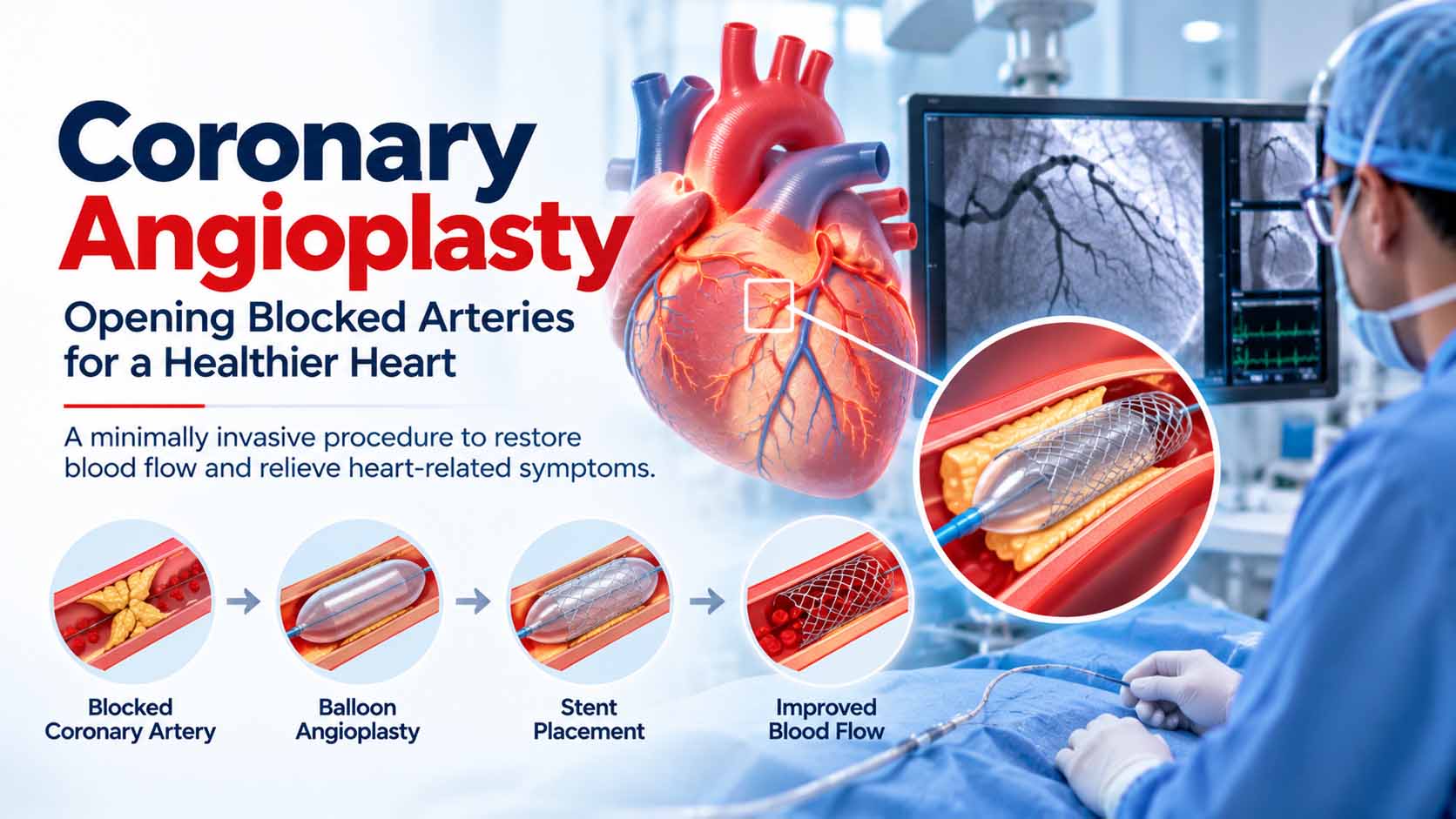
Coronary artery disease develops when the blood vessels supplying oxygen-rich blood to the heart become narrowed or blocked, often due to the buildup of fatty deposits called plaque. When these blockages significantly restrict blood flow, they may cause chest discomfort, shortness of breath, or, in some cases, a heart attack.
Coronary angioplasty, also known as percutaneous coronary intervention (PCI), is a minimally invasive cardiac procedure used to open selected narrowed or blocked coronary arteries and improve blood flow to the heart muscle.
The procedure commonly involves inflating a small balloon inside the affected artery and, in many cases, placing a coronary stent to help keep the artery open.
Dr. Vineet Bansal, MBBS, MD, DM (Cardiology), is a cardiologist based in Meerut, Uttar Pradesh. Understanding the purpose, benefits, risks, and recovery associated with coronary angioplasty can help patients make informed decisions about their cardiovascular care.
Coronary angioplasty is a catheter-based procedure used to treat certain narrowed or blocked coronary arteries.
During angioplasty, a thin, flexible tube called a catheter is inserted into a blood vessel, usually through the wrist or groin. Specialized equipment is guided toward the affected coronary artery under X-ray imaging.
A small balloon may be inflated at the narrowed area to improve the opening within the artery.
In many cases, a coronary stent, a small expandable mesh tube, is placed to support the artery and help maintain blood flow.
Coronary angioplasty is performed in a cardiac catheterization laboratory, commonly known as a cath lab.
Unlike coronary artery bypass surgery, angioplasty does not usually require opening the chest.
A cardiologist may recommend coronary angioplasty when there is a clinically significant narrowing or blockage in a coronary artery and the expected benefits outweigh the risks.
Common situations include:
Not every coronary artery blockage requires angioplasty.
Treatment decisions depend on the patient's symptoms, the location and severity of the blockage, overall health, and available evidence.
Coronary artery disease can produce different symptoms depending on the severity of reduced blood flow.
Possible symptoms include:
Chest discomfort may feel like pressure, squeezing, tightness, or heaviness, particularly during physical activity.
Some individuals experience breathlessness during walking, climbing stairs, or other routine activities.
Heart-related discomfort can sometimes spread beyond the chest.
A noticeable reduction in exercise tolerance or unexplained tiredness may occur in certain cardiovascular conditions.
These symptoms may accompany acute coronary syndromes, including heart attacks.
Emergency Warning: Sudden, severe, or persistent chest discomfort, especially with breathlessness, sweating, fainting, or pain spreading to the arm or jaw, requires immediate emergency medical assistance.
Coronary angioplasty is generally performed by a trained interventional cardiology team in a specialized cardiac catheterization laboratory.
Before the procedure, the healthcare team evaluates the patient's medical history, symptoms, medications, kidney function, allergies, and relevant investigations.
In emergency situations, assessment and treatment may take place rapidly.
The catheter insertion area, usually the wrist or groin, is cleaned and numbed with local anesthesia.
Some patients may receive medication to help them relax.
A catheter is introduced into the blood vessel and guided toward the coronary arteries using X-ray imaging.
Contrast dye is used to visualize the coronary arteries and identify the location and severity of narrowing.
A guidewire is passed through the affected area, and a small balloon may be inflated to widen the narrowed segment.
In many procedures, a stent is expanded inside the artery to help keep it open.
Drug-eluting stents are commonly used because they release medication that helps reduce the risk of tissue growth causing re-narrowing.
The healthcare team assesses the treated artery and blood flow before removing the catheter.
The patient is then monitored for possible complications and recovery.
The procedure duration varies depending on the complexity of the coronary artery disease and the patient's clinical condition.
A coronary stent is a small expandable mesh tube used to support a coronary artery after angioplasty.
Stents are commonly made of metal alloys and are designed to remain inside the artery.
Drug-Eluting Stents (DES): Release medication over time to reduce the risk of excessive tissue growth within the treated artery.
Bare-Metal Stents (BMS): Do not release medication and are used much less frequently in contemporary coronary intervention.
The choice of device depends on clinical circumstances, coronary anatomy, and procedural considerations.
Not every coronary intervention requires a stent, although stenting is common.
The potential benefits depend on the reason angioplasty is performed.
Angioplasty can widen a narrowed coronary artery and improve blood supply to the affected heart muscle.
In selected patients with stable coronary artery disease, angioplasty can reduce chest discomfort and improve exercise tolerance.
Emergency PCI is an important treatment for specific types of heart attack and can reduce heart muscle damage when performed promptly.
Some patients experience improved ability to perform daily activities after successful treatment.
PCI is less invasive than coronary artery bypass surgery, although bypass surgery may be more appropriate for certain patterns of coronary artery disease.
Important: In stable coronary artery disease, angioplasty does not necessarily reduce the risk of death or future heart attacks compared with appropriate medical therapy for every patient. Its benefits must be considered according to the individual clinical situation.
Coronary angioplasty is an established cardiac procedure, but it carries potential risks.
Possible complications include:
The likelihood of complications depends on factors such as age, kidney function, other medical conditions, the urgency of the procedure, and coronary artery anatomy.
A healthcare professional should explain the potential benefits and risks before treatment.
Recovery varies depending on whether angioplasty was performed as a planned procedure or during a heart attack.
Some patients undergoing uncomplicated elective PCI may be discharged the same day or after an overnight stay.
Patients treated during a heart attack or those with additional medical problems may require longer hospitalization.
Catheter Site Care: Follow instructions for keeping the insertion site clean and monitoring for bleeding or swelling.
Physical Activity: Resume activities according to the treating healthcare team's advice. Heavy lifting and strenuous exercise may need to be avoided temporarily.
Medications: Take prescribed medications consistently, particularly antiplatelet medicines after stent placement.
Medications: Take prescribed medications consistently, particularly antiplatelet medicines after stent placement.
Cardiac Rehabilitation: A supervised cardiac rehabilitation program may be recommended to support recovery and cardiovascular health.
Follow-Up: Attend recommended medical reviews and discuss any new or worsening symptoms.
Seek urgent medical care for new chest pain, significant breathlessness, persistent bleeding, or other concerning symptoms after the procedure.
After coronary stent placement, patients are commonly prescribed antiplatelet medications to reduce the risk of blood clot formation within the stent.
Treatment may include aspirin and another antiplatelet medication for a duration determined by the treating cardiologist.
The recommended regimen depends on whether PCI was performed for stable coronary disease or an acute coronary syndrome, along with bleeding risk and other clinical factors.
Additional medications may be prescribed to manage cholesterol, blood pressure, diabetes, or other cardiovascular conditions.
Never stop prescribed antiplatelet medication without consulting the treating cardiologist, because premature discontinuation can increase the risk of serious complications.
Coronary angioplasty and coronary artery bypass grafting (CABG) are two different approaches to treating coronary artery disease.
Coronary Angioplasty (PCI): Uses catheter-based devices to open selected coronary artery narrowings.
Coronary Bypass Surgery (CABG): Uses blood vessels from another part of the body to create alternative pathways for blood flow around blocked coronary arteries.
Bypass surgery may be preferred in certain patients with complex multivessel disease, specific left main coronary artery disease, or other high-risk anatomical patterns.
The choice depends on coronary anatomy, diabetes status, heart function, symptoms, procedural risk, and individual preferences.
For complex cases, a multidisciplinary Heart Team may help determine the most appropriate treatment strategy.
Coronary angioplasty treats selected narrowed arteries but does not cure the underlying process of atherosclerosis.
Long-term cardiovascular risk management remains essential.
Helpful measures include:
These measures help reduce the risk of future cardiovascular complications.
Coronary artery disease is an important public health concern, and understanding available treatment options can help patients make informed healthcare decisions.
For individuals living in Meerut and nearby areas, awareness of heart attack symptoms, coronary artery disease, and procedures such as angioplasty is particularly valuable.
Dr. Vineet Bansal, MBBS, MD, DM (Cardiology), is a cardiologist based in Meerut, Uttar Pradesh.
Understanding when coronary angioplasty may be recommended, how the procedure works, and what recovery involves can help patients participate in informed discussions with their healthcare professionals.
Coronary angioplasty is a minimally invasive catheter-based procedure rather than traditional open-chest surgery. However, it is still a significant medical intervention with potential risks.
The insertion area is numbed with local anesthesia. Patients may experience pressure or temporary discomfort, but significant pain is not typical during an uncomplicated procedure.
The duration varies depending on the complexity of the blockage and the patient's condition. Some procedures take approximately one hour, while complex interventions may require longer.
No. Some coronary artery blockages can be managed with medications and lifestyle measures, while others may require angioplasty or bypass surgery.
Coronary stents are generally designed to remain permanently in the artery. However, re-narrowing or clot formation can occur, which is why appropriate medication and follow-up are important.
Many people return to their usual activities after recovery. Long-term outcomes depend on the underlying heart disease, overall health, medication adherence, and lifestyle habits.
Yes. Re-narrowing of the treated artery or new blockages elsewhere can occur. Long-term cardiovascular prevention remains important.
Neither procedure is universally better. The appropriate treatment depends on coronary anatomy, disease complexity, other medical conditions, and individual clinical circumstances.
Yes. Emergency angioplasty is an important treatment for certain heart attacks, particularly when rapid restoration of coronary blood flow is required.
Patients should follow prescribed medication schedules, avoid tobacco, manage cardiovascular risk factors, attend follow-up appointments, and follow their healthcare team's activity and recovery instructions.
Coronary angioplasty is an important treatment option for selected patients with coronary artery disease.
By opening narrowed or blocked coronary arteries, the procedure can improve blood flow, relieve angina symptoms, and play a critical role in the treatment of certain heart attacks.
However, angioplasty is not necessary for every patient with coronary artery disease, and it does not eliminate the need for ongoing cardiovascular care.
Understanding the procedure, its potential benefits, risks, recovery requirements, and long-term preventive measures can help patients make informed decisions.
Medical Disclaimer: This content is intended solely for public awareness and educational purposes. It does not constitute personalized medical advice, diagnosis, or treatment, or promote any medical services. Treatment decisions should be based on individual clinical assessment by a qualified healthcare professional.