Location
3/4, Sarswati Plaza Opp. N.A.S. College, E.K. Road, Meerut

Dr. Vineet Bansal's Clinic, located at 3/4, Saraswati Plaza, Opposite N.A.S. College, E.K. Road, Meerut, is renowned for its excellence in cardiology. With exceptional expertise, Dr. Vineet Bansal is committed to delivering high-quality, personalized healthcare services.
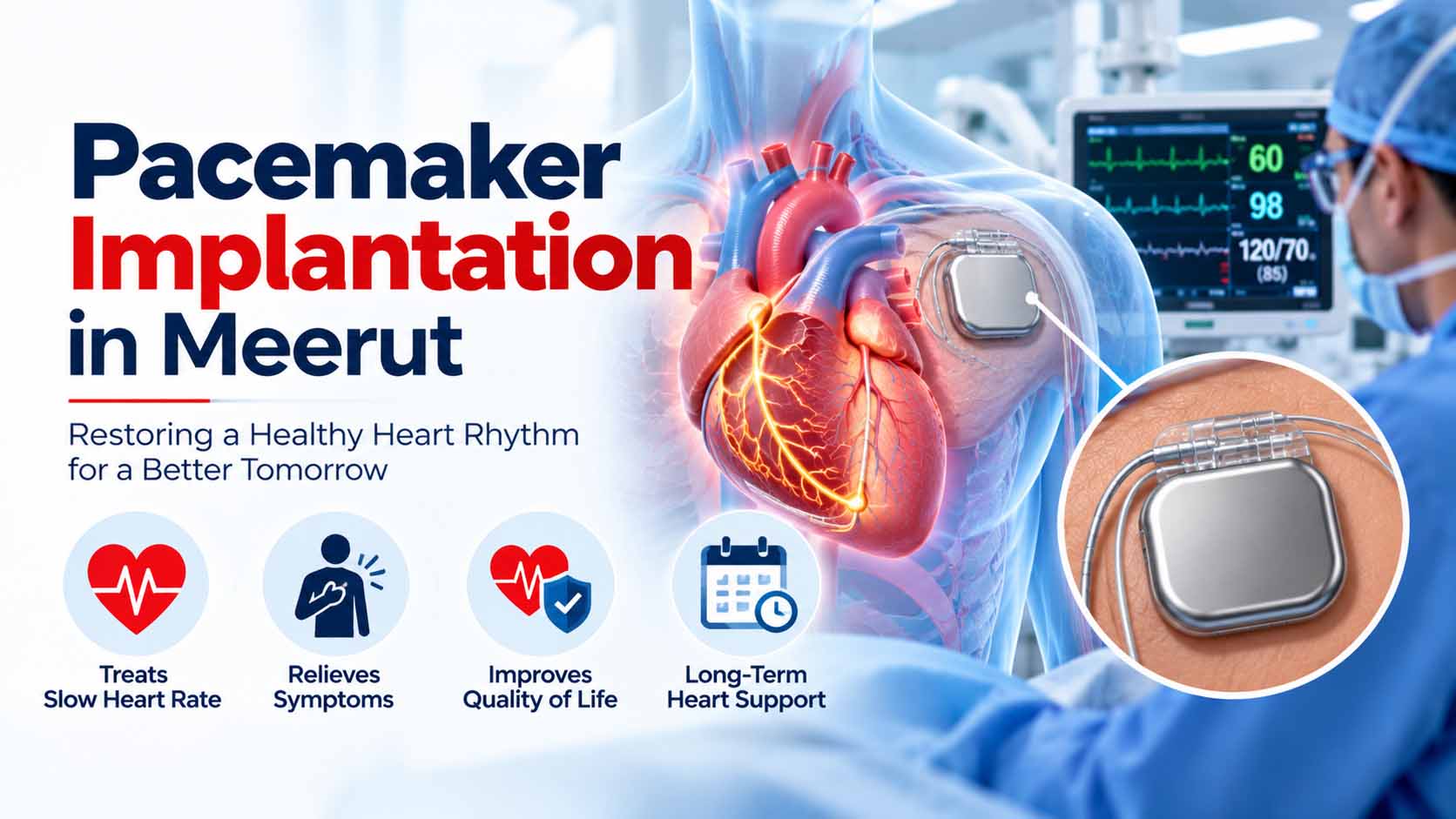
The human heart has a natural electrical system that controls the timing and rhythm of each heartbeat. When this electrical system does not function properly, the heart may beat too slowly or develop certain abnormal rhythms, potentially affecting blood circulation throughout the body.
Pacemaker implantation is a cardiac procedure in which a small electronic device is placed inside the body to help maintain an appropriate heart rate when the heart's natural electrical system is unable to do so.
A permanent pacemaker may be recommended for selected patients with symptomatic bradycardia (slow heart rate), certain types of heart block, or other clinically significant electrical conduction disorders.
Dr. Vineet Bansal, MBBS, MD, DM (Cardiology), is a cardiologist based in Meerut, Uttar Pradesh. Understanding pacemaker implantation, its indications, procedure, risks, and long-term care can help patients make informed decisions about their cardiovascular health.
A pacemaker is a small, battery-powered medical device that helps regulate the heartbeat by delivering electrical impulses when needed.
It monitors the heart's electrical activity and sends impulses when the natural heartbeat becomes too slow or fails to conduct appropriately.
A conventional pacemaker generally consists of two main components:
Pulse Generator: A small device containing a battery and electronic circuitry that controls pacing.
Pacing Leads: Thin insulated wires that connect the pulse generator to the heart and deliver electrical impulses.
Some newer leadless pacemakers are placed directly inside the heart and do not require conventional pacing leads.
The type of pacemaker depends on the patient's heart rhythm condition and clinical requirements.
Pacemaker implantation may be considered when the heart's electrical conduction system cannot maintain an appropriate heart rate.
Common indications include:
Bradycardia refers to an abnormally slow heart rate.
Some healthy individuals, particularly athletes, naturally have lower resting heart rates without requiring treatment.
However, a slow heart rate that causes dizziness, fainting, fatigue, or reduced exercise tolerance may require further investigation and, in selected cases, pacemaker implantation.
Also called sinus node dysfunction, this condition occurs when the heart's natural pacemaker does not generate electrical impulses appropriately.
It may cause unusually slow heart rates, pauses between heartbeats, or alternating slow and fast rhythms.
Permanent pacing may be appropriate when symptoms are linked to the rhythm abnormality.
Heart block occurs when electrical signals are delayed or interrupted as they travel from the upper chambers to the lower chambers of the heart.
Certain advanced forms of AV block may require permanent pacemaker implantation, even when symptoms are not obvious.
Some patients with heart failure and specific electrical conduction abnormalities may benefit from cardiac resynchronization therapy (CRT), a specialized form of cardiac pacing.
CRT is not the same as a standard pacemaker and is recommended according to specific clinical criteria.
Occasionally, electrical conduction abnormalities develop after cardiac surgery or certain catheter-based interventions.
If these abnormalities persist and meet established clinical criteria, pacemaker implantation may be considered.
Important: Not every slow heartbeat or abnormal ECG requires a pacemaker. Treatment decisions depend on symptoms, rhythm findings, reversible causes, and the patient's overall clinical condition.
Some people with slow heart rhythms experience no symptoms, while others may develop symptoms related to reduced blood flow.
Possible warning signs include:
These symptoms can have many causes and do not automatically indicate the need for a pacemaker.
Pacemaker implantation is usually performed in a hospital under sterile conditions by a trained cardiac team.
The exact technique depends on the type of device being implanted.
Before implantation, the healthcare team reviews the patient's medical history, medications, heart rhythm findings, and relevant investigations.
Tests may include an electrocardiogram (ECG), ambulatory rhythm monitoring, echocardiography, and blood tests when appropriate.
For conventional pacemaker implantation, local anesthesia is generally administered near the upper chest.
Sedation may also be provided depending on the patient's needs and the procedure.
A small incision is made, usually below the collarbone.
One or more pacing leads are guided through a vein into the appropriate heart chambers using X-ray imaging.
The leads are connected to the pulse generator, which is usually placed in a small pocket beneath the skin of the upper chest.
The healthcare team checks the electrical sensing, pacing function, and lead position.
The incision is closed, and the patient is monitored for potential complications.
A conventional pacemaker implantation often takes approximately one to two hours, although the duration can vary.
Leadless pacemakers use a different implantation technique, usually involving catheter-based delivery through a vein in the groin.
Different types of pacemakers are available depending on the patient's rhythm disorder.
A single-chamber pacemaker usually has one lead positioned in either the right atrium or right ventricle.
It may be appropriate for selected rhythm disorders.
A dual-chamber pacemaker typically uses two leads, one in the right atrium and another in the right ventricle.
It can help coordinate electrical activity between these chambers in suitable patients.
Cardiac resynchronization therapy uses specialized pacing to improve coordination between the ventricles in selected patients with heart failure.
A leadless pacemaker is a compact device placed directly inside the heart through a catheter.
It avoids a conventional chest pocket and transvenous pacing leads, although it is not suitable for every patient.
The choice of device depends on medical indications, heart rhythm characteristics, anatomy, and other clinical considerations.
The benefits of pacemaker implantation depend on the underlying rhythm disorder.
Potential benefits include:
Maintaining an Appropriate Heart Rate: A pacemaker can prevent certain excessively slow heart rhythms.
Reducing Rhythm-Related Symptoms: In appropriately selected patients, pacing may reduce dizziness, fatigue, and fainting associated with bradycardia.
Supporting Daily Activities: Some patients experience improved exercise tolerance and ability to perform routine activities.
Managing Significant Heart Block: Permanent pacing can provide essential support when electrical signals are unable to travel reliably through the heart.
Improving Selected Heart Failure Conditions: Specialized CRT devices may improve symptoms and outcomes in appropriately selected patients.
A pacemaker does not cure every type of heart rhythm disorder or prevent all cardiovascular complications.
Pacemaker implantation is an established cardiac procedure, but it carries potential risks.
Possible complications include:
The risk varies depending on the patient's health, device type, implantation technique, and other factors.
The treating team should explain the expected benefits and possible complications before implantation.
Some patients may be discharged the same day or after an overnight hospital stay, while others require longer observation.
Keep the incision clean and follow the healthcare team's instructions regarding dressings, bathing, and signs of infection.
Patients with conventional transvenous pacemakers may need to avoid heavy lifting and excessive arm movements on the implantation side for a period recommended by their treating team.
Specific restrictions vary according to the procedure and local clinical guidance.
Pacemakers require periodic checks to assess battery status, pacing function, lead performance, and programmed settings.
Continue prescribed medications unless the treating healthcare professional advises otherwise.
Seek prompt medical assessment if you experience:
Pacemaker batteries commonly last approximately 5–15 years, although actual longevity varies considerably.
Battery life depends on the pacemaker model, pacing requirements, programmed settings, and device usage.
Regular device checks help estimate remaining battery life.
When the battery approaches the end of its service life, the pulse generator can generally be replaced through a planned procedure.
Many individuals can return to normal daily activities after recovery from pacemaker implantation.
Long-term care involves understanding the device and following appropriate medical recommendations.
Important considerations include:
Most everyday household electronic devices are safe when used according to the pacemaker manufacturer's guidance.
Heart rhythm disorders can affect individuals of different ages and medical backgrounds.
Recognizing symptoms such as unexplained fainting, dizziness, or unusually slow heart rates may help individuals understand when medical evaluation is necessary.
For patients in Meerut and surrounding areas, awareness of pacemaker implantation and its role in managing selected heart rhythm disorders is an important part of cardiovascular education.
Dr. Vineet Bansal, MBBS, MD, DM (Cardiology), is a cardiologist based in Meerut, Uttar Pradesh.
Understanding the indications, procedure, recovery, and long-term follow-up associated with pacemakers can support informed discussions between patients and healthcare professionals.
A pacemaker helps maintain an appropriate heart rate when the heart's natural electrical system is unable to do so.
Conventional pacemaker implantation is generally a minimally invasive procedure, but it remains an important medical intervention with potential complications.
Local anesthesia is usually used to numb the implantation area. Patients may experience pressure during the procedure and temporary soreness afterward.
A conventional pacemaker implantation often takes approximately one to two hours, although the duration varies depending on device type and procedural complexity.
Many individuals return to normal daily activities after recovery. The outcome depends on the underlying heart condition and other medical factors.
Pacemaker batteries commonly last around 5–15 years, depending on the device and individual pacing requirements.
Yes. Pacemakers may be appropriate for older adults when there is a clear medical indication. Age alone does not determine suitability.
No. Some slow heart rates are normal. Pacemaker implantation depends on the underlying rhythm disorder, symptoms, and clinical findings.
Most modern mobile phones can be used with appropriate precautions. Patients should follow their device manufacturer's guidance, including recommendations about keeping phones and magnets away from the implant site.
Yes. Regular pacemaker checks are important to monitor battery status, device function, pacing settings, and potential technical issues.
Pacemaker implantation is an important treatment option for selected patients with slow heart rhythms and certain electrical conduction disorders.
By supporting an appropriate heart rate, a pacemaker can help reduce rhythm-related symptoms and provide essential cardiac pacing when the heart's electrical system is unable to function reliably.
Understanding the procedure, its potential benefits, possible risks, and long-term care requirements helps patients make informed healthcare decisions.
Medical Disclaimer: This content is intended solely for public awareness and educational purposes. It does not constitute personalized medical advice, diagnosis, or treatment, or promote any medical services. Pacemaker implantation and device selection should be based on individual clinical assessment by a qualified healthcare professional.